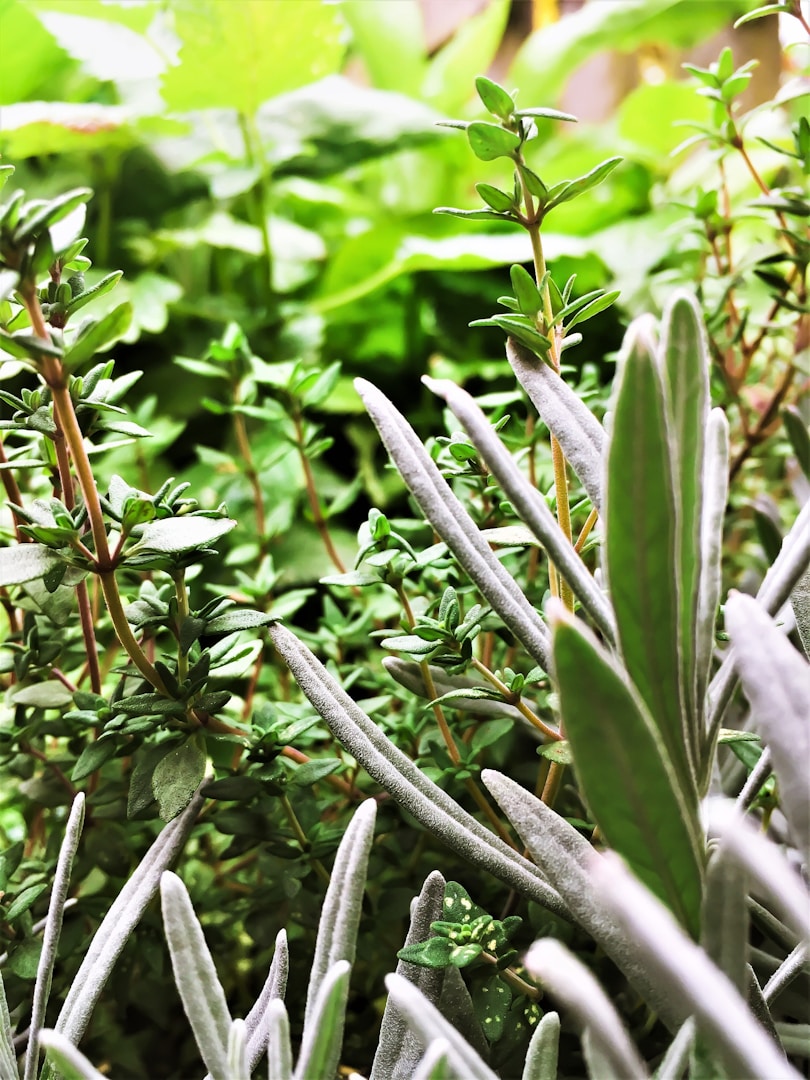
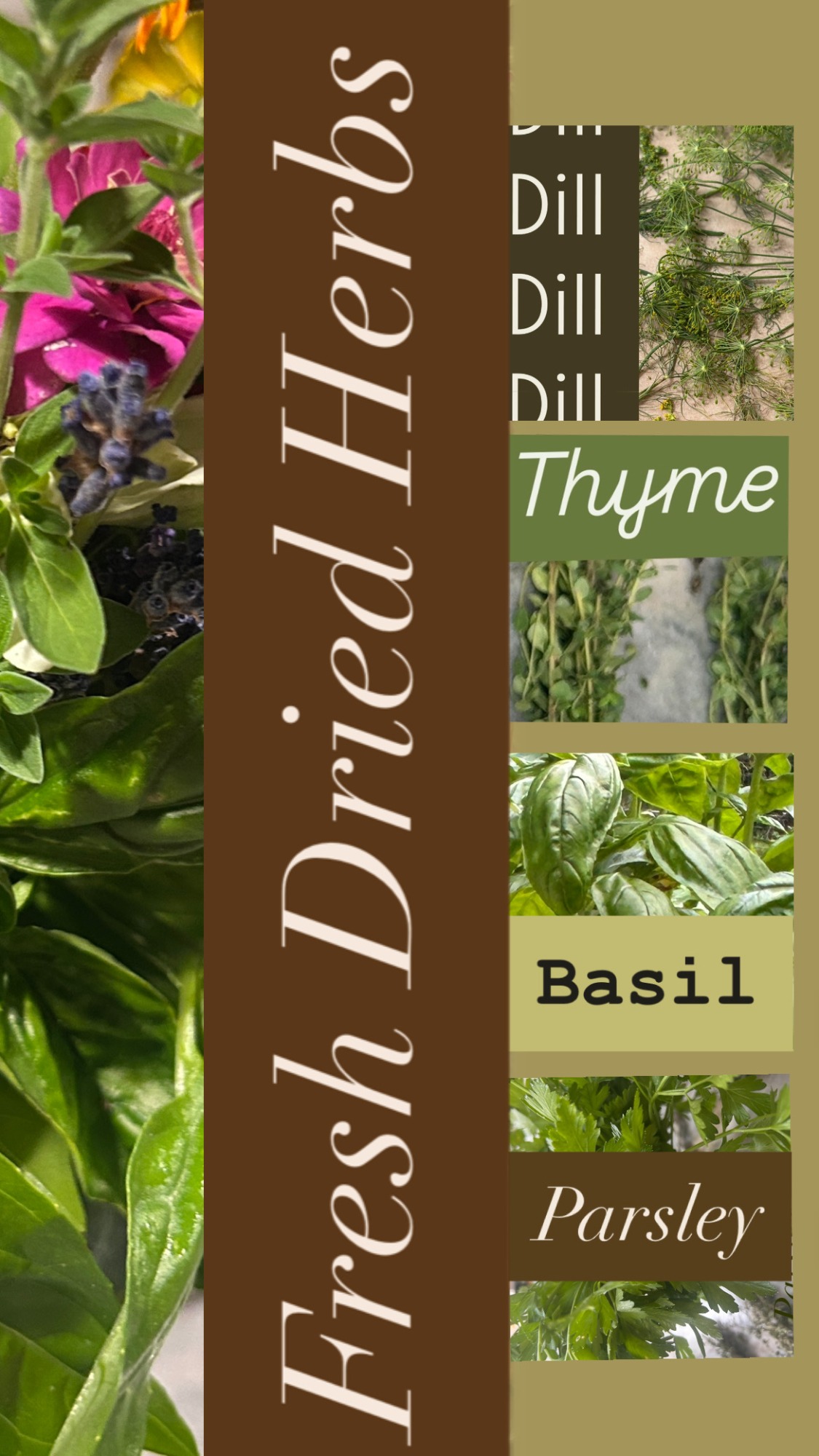
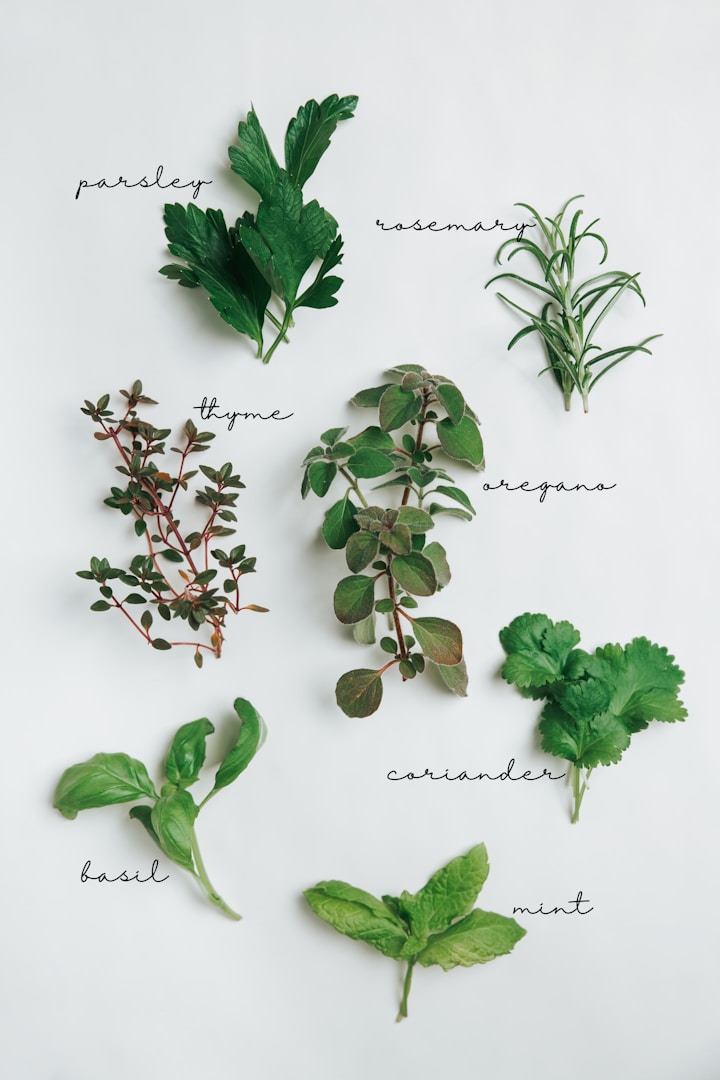
Rosemary, Sage, Lemon Thyme, Basil, Oregano, Parsley, Marjoram, Dill and Cilantro.
Preserving (drying two ways)
The preferred method of drying herbs is to clean them, pat dry with paper towel or terrycloth towel. Bunch them, tie with kitchen string or twine and hang them in the kitchen.
Another option which takes some of the flavor away is to bake them on a cookie sheet at a very low temperature. My oven will not allow me to choose lower than 170 degrees. If you can lower your oven temperature to 125, that is ideal. Drying time will be longer but the color, flavor and nutrients will be much better preserved.
After you rinse and dry the herbs, de-stem them. lay the leaves in a single layer (overlapping will prolong drying) on a cookie sheet.
Rosemary can be left on the stem until after it is dry (it is the best method specifically for Rosemary).
Cilantro-although potent in flavor, when dried using either method below, does seem to lose almost all character of flavor so we choose to only consume it fresh.
The smaller leaf herbs such as oregano, marjoram, dill and thyme for example are much more difficult to separate from the stem after baking.
The herbs when baked are done when they crunch to the touch. Store them in a mason jar. Dried herbs are not meant to store longer than 2 years.
Sage, basil, parsley, rosemary bake at 170 degrees, +/-60 minutes
Thyme, marjoram, oregano, Dill bake at 170 degrees, 30-45
Times will vary depending on your oven. It is important to check them during the last 10 minutes of baking to avoid burning
Ultimately if you have a dehydrator instead of the oven, that is optimal.