Mountain Honey and Huckleberries
Raw, Unfiltered, Spun straight from the frame....
In Spring, as soon as the temperature hits 50 degrees the bees take flight. This is their first chance to do housekeeping and to stretch their wings after being cooped up. Immediately bees begin to forage fresh nectar. To us it may seem that little is available for the bees to forage. On the contrary there is an abundance as they aren't only attracted to our garden flowers, they forage the trees, even beech and sourwood.
In my past experiences raising bees, the Spring honey flow produces light colored honey and the flavor is a bit more refined due to what is available on the mountain at the time. As the changes to the hot summer months, all is in full bloom, the color deepens to an amber and more familiar depth in flavor from our childhood memories.
The garden production has been planned to support the bees with very early flowers to help them rear the next generation of bees that will continue the honey production. Supporting bees requires a clean water source, a healthy habitat, and to be responsible with how we treat pests in the garden, the lawn, and the greater property around them. We know how harmful chemicals are. Be assured none are used anywhere on property.
It is simple...no bees...no food...no food...no life. Love your bees' friends!
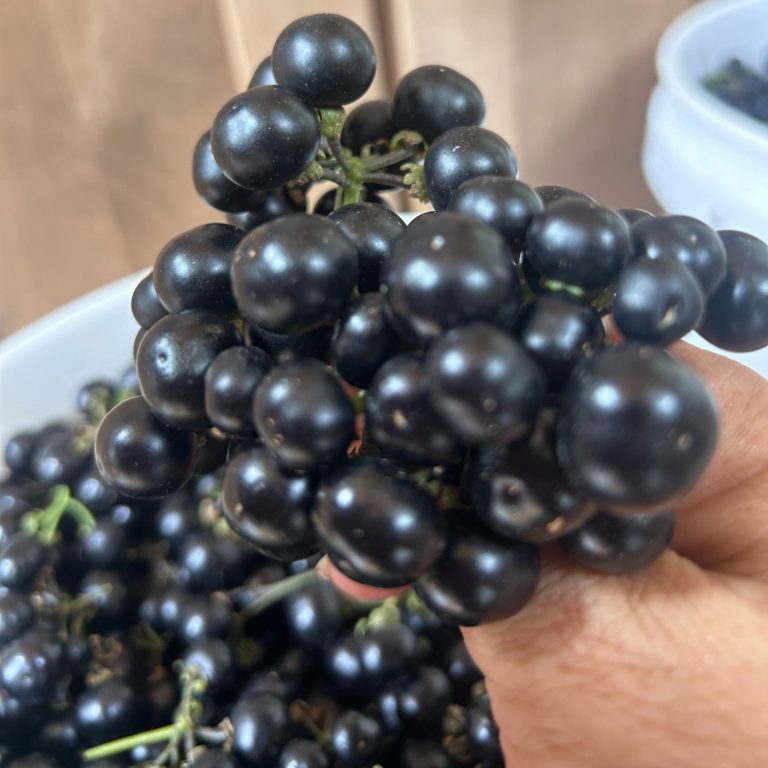
Have you ever seen berries so big? Consistently, the bushes produce large berries. Harvested the day after our first hard frost made them much less tart. This year the harvest was 14 gallons from 21 bushes. Huckleberries- if you haven't tried these garden variety, are ripe when the skin is completely black and dull. They are very tart before cooked. When cooked they become sweeter, with intense wild berry, floral, and blueberry notes.